 Update: The City of Chicago Plan Commission approved the Green Healthy Neighborhoods Plan on March 20, 2014.
Among Chicago's greatest strengths is the diversity and vibrancy of its neighborhoods. Like a number of Midwestern cities, however, a few Chicago neighborhoods are faced with multiple challenges, including a crippled housing market, lack of employment opportunities, and many years of population decline. The results of these conditions are apparent in a number of Chicago community areas that once were densely populated and lively but now suffer from high vacancy and unemployment with little relief predicted in the foreseeable future. Today, in light of vastly different economic and market conditions, public and private interests need a road map for how to invest in these neighborhoods to make the most efficient and effective improvements.
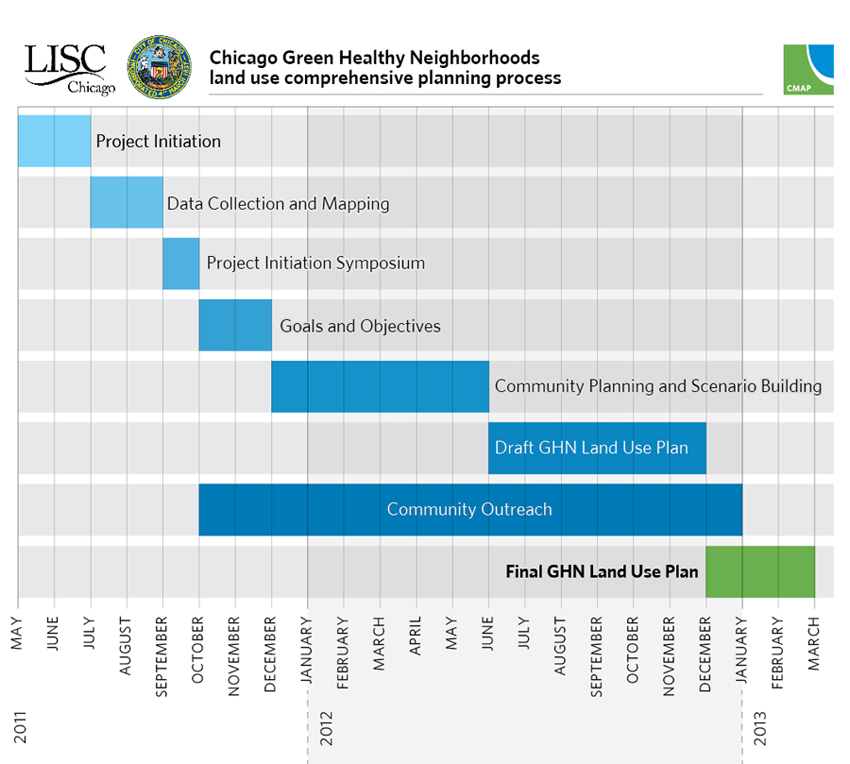
The City of Chicago, its partners, and the residents and business owners of these neighborhoods are engaging in a project to create plans and policies that will guide decision-making and investments for years to come. Englewood, Woodlawn, and Washington Park make up the priority areas of a new project called Green Healthy Neighborhoods (GHN), which is intended to better target public and private investments in the most efficient and effective way. CMAP provides staff planning support through its Local Technical Assistance (LTA) program.
This LTA-supported project will examine a variety of models for neighborhood reinvestment that build on existing assets as catalysts for broader investment and redevelopment. Fortunately, the residents, business owners, and other stakeholders have been meeting for years and planning to address these challenges through a variety of projects and initiatives.
For example, LISC/Chicago's New Communities Program has been working for many years to create and implement quality-of-life plans. These plans outline strategies for improvement in areas such as housing, urban agriculture, and the re-purposing of vacant land for a variety of uses. The new Kennedy-King College and Washburn Culinary Institute, at 63rd and Halsted, represents over $200 million investment by the City of Chicago. In Woodlawn, the Grove Park redevelopment project is bringing new, affordable green housing to the area around 63rd Street and Cottage Grove. The Wood Street Farm, a Growing Home project at 58th and Wood, is focused on growing healthy produce and providing training and transitional employment for area residents. Near the Green Line station at 51st and Prairie, Urban Juncture is leading a project to create a unique produce market, dining destination, and culinary incubator celebrating the cuisines, cultures, and communities of peoples of African descent.
These projects represent a new beginning for these neighborhoods, and one of the new faces of urban development. As a result, these communities already have a great deal of momentum moving toward a better future.